 English
 Spanish

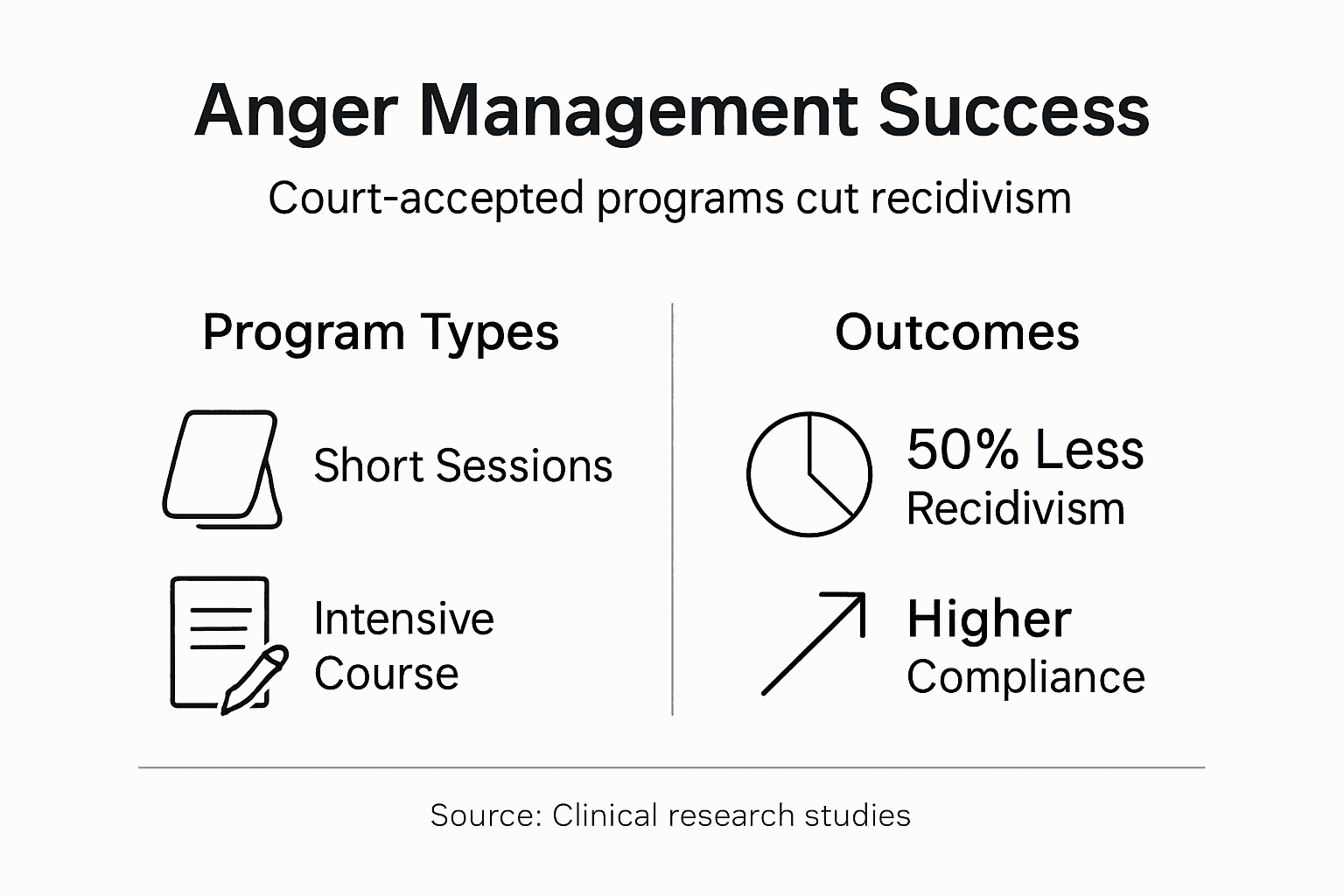
Court-accepted anger management programs cut recidivism 50%

Many people think any anger management certificate will satisfy their court order. That’s wrong. Courts nationwide reject hundreds of certificates annually because they lack proper accreditation or verifiable documentation. Finding a program that meets strict legal standards while providing effective treatment can feel overwhelming. This guide explains exactly what courts require, how accredited programs work, which certifications hold up under legal scrutiny, and the steps to complete your mandate successfully.
Table of Contents
- Understanding Court Requirements For Anger Management Programs
- Accredited Anger Management Programs: Types And Course Lengths
- Psychological Assessments: Tailoring Program Length And Intensity
- Legal Documentation And Certification: What Courts And Employers Expect
- Common Misconceptions About Court-Ordered Anger Management
- Comparing Accredited Providers And Program Features
- Steps To Successfully Complete Court-Ordered Anger Management Programs
- Get Started With Accredited Anger Management Programs Today
- Frequently Asked Questions About Court-Ordered Anger Management Programs
Key takeaways
| Point | Details |
|---|---|
| Court mandates require accredited programs | Only providers with verifiable credentials and proper documentation satisfy legal requirements. |
| Psychological assessments improve outcomes | Tailored program length based on clinical screening reduces violent recidivism by up to 50%. |
| Program lengths vary from 4 to 52 hours | Courts accept multiple formats including online courses when properly accredited. |
| Proper documentation prevents legal issues | Certificates must include provider credentials, course hours, and independent verification. |
| Timely completion avoids penalties | Submitting valid certificates promptly keeps you compliant with probation and court orders. |
Understanding court requirements for anger management programs
U.S. courts don’t accept generic anger management programs. They require court mandates for anger management that meet specific legal and clinical standards. Requirements vary by jurisdiction, but all demand verifiable certificates from recognized providers.
Probation officers actively enforce completion deadlines. They check provider credentials, course content, and documentation quality. Accreditation ensures programs follow evidence-based curriculum that courts trust.
Key court requirements include:
- Provider must be licensed or credentialed in mental health or conflict resolution
- Program content follows clinically proven anger management frameworks
- Certificates include verifiable contact information for independent confirmation
- Course hours match the specific mandate issued by the judge or probation officer
- Documentation provides clear evidence of assessment and completion
Failure to meet these standards results in rejected certificates. You’ll waste time and money repeating courses. Some clients face extended probation or additional penalties.
Research shows court-ordered anger management programs that integrate psychological assessments see up to 50% reduction in violent recidivism within 12 months post-completion. This evidence supports why courts insist on accredited providers who use standardized screening tools and proven curriculum.
Pro Tip: Call your probation officer before enrolling to confirm specific requirements. Ask about acceptable providers, required course hours, and documentation format to avoid compliance issues.
Accredited anger management programs: types and course lengths
Accredited programs range from brief 4-hour sessions to intensive 52-hour courses. The length depends on offense severity, risk assessment results, and court orders. Shorter programs suit first-time offenders with low-risk profiles. Longer courses address chronic anger patterns or violent offenses.

Over 60% of U.S. courts now accept accredited online programs. This shift recognizes that verified anger management course features matter more than format. Clients can complete requirements without disrupting work schedules or family obligations.
Program format options include:
- Online self-paced courses with video lessons and interactive exercises
- Live virtual group sessions led by licensed facilitators
- In-person classes at local clinics or community centers
- Blended formats combining online modules with periodic in-person check-ins
- Intensive weekend workshops for accelerated completion
Clinical evidence supports matching course intensity to client needs. Generic one-size-fits-all programs show lower completion rates and poorer outcomes. Courts increasingly require providers to justify recommended course lengths through formal assessments.
Flexible scheduling helps you stay compliant. Many accredited providers offer 24/7 access to online materials. You can work around job demands, childcare, or other commitments. Just ensure your chosen program meets your jurisdiction’s specific requirements, like state-specific anger management classes designed for local court acceptance.
Psychological assessments: tailoring program length and intensity
Standardized psychological assessments personalize your program assignment. Tools like the Conover Assessment measure anger intensity and impulsivity to recommend appropriate course length tailored to individual risk levels. This clinical approach increases correct course assignments by 85% compared to arbitrary enrollment.
Assessments evaluate multiple factors:
- Current anger frequency and triggers
- Impulse control capacity and risk behaviors
- History of conflict or violence
- Stress management skills and coping mechanisms
- Willingness to change and treatment motivation
Tailored programs lead to better outcomes. Clients assigned courses matching their assessment profiles show higher completion rates. They demonstrate measurable improvement in anger control and conflict resolution skills. Courts recognize this evidence and prefer providers who use formal screening tools.
The anger management assessment tools used by accredited providers generate detailed reports. These documents explain why specific course lengths were recommended. They provide courts with objective evidence supporting program selection.
Assessment-driven programs prevent under-treatment and over-treatment. Under-treatment means inadequate skill-building for high-risk individuals. Over-treatment wastes time and resources on clients who need minimal intervention. Proper matching optimizes both compliance and behavioral change.
Pro Tip: Answer assessment questions honestly. Minimizing anger issues may get you assigned a shorter course that doesn’t address underlying problems. Courts may then mandate additional treatment later, extending your overall requirements.
Legal documentation and certification: what courts and employers expect
Completion certificates prove you satisfied court requirements. But not all certificates are created equal. Courts and employers verify documentation quality before accepting it as valid proof.
Your certificate must include:
- Provider’s full legal name and professional credentials
- License numbers and accreditation details
- Total course hours completed
- Completion date and assessment basis
- Verifiable contact information including phone and email
- Company tax identification number for legitimacy confirmation
Supporting documents strengthen your case. Provider letters explain the clinical basis for your course assignment. Detailed completion reports show which topics you covered and skills you learned. These extras help courts understand the quality and rigor of your program.
Timely submission prevents legal problems. Submit documentation as soon as you finish your program. Don’t wait until the deadline. Processing can take days or weeks. Late submission may trigger probation violations or additional penalties.
Verification matters because fake certificates circulate online. Courts contact providers directly to confirm legitimacy. Providers must respond quickly with accurate information. Choose programs that clearly explain their court certification requirements and verification process.
Some jurisdictions require specific documentation formats. Others accept standard certificates. Always confirm what your court or employer needs before starting any program. This simple step prevents wasted effort on programs that won’t satisfy your specific legal documentation for anger management requirements.
Common misconceptions about court-ordered anger management
Misconceptions lead to failed compliance and legal trouble. Understanding the truth helps you avoid expensive mistakes.
- All anger management programs fulfill court requirements equally. False. Only accredited programs with verifiable certification are accepted. Generic online courses or YouTube videos don’t count. Courts require providers with professional credentials and documented curriculum.
- Online programs are not accepted by courts. Wrong. Over 60% of U.S. jurisdictions now accept accredited online programs. Format matters less than provider quality and documentation. Many online programs offer better flexibility and completion rates than in-person options.
- Certification guarantees behavior change. Not exactly. Certification proves you completed required hours and passed assessments. It doesn’t automatically mean lasting behavioral modification. Real change requires applying skills learned during the program to daily life.
- Any licensed therapist can provide court-accepted programs. Incorrect. General therapy differs from structured anger management curriculum. Courts want providers who specialize in anger and conflict resolution with evidence-based programs designed for mandated clients.
- Cheaper programs offer the same value as premium providers. Rarely true. Low-cost programs often lack proper accreditation, clinical oversight, or acceptable documentation. You risk certificate rejection, forcing you to repeat courses at higher total cost.
Pro Tip: Research provider backgrounds before enrolling. Check credentials, read reviews from court-ordered clients, and verify acceptance with your probation officer. Don’t assume price or convenience indicate quality. Visit pages addressing common misconceptions about anger management to learn more about avoiding pitfalls and ensuring your program meets legal standards through proper misconceptions correction.
Comparing accredited providers and program features
Not all accredited providers offer the same quality or acceptance rates. Smart comparison helps you choose programs that satisfy courts while providing valuable skills.
Evaluate these key features:
- Clinical credibility: Clinician-owned providers bring licensed mental health expertise. Generic companies may lack qualified oversight.
- Curriculum evidence base: Programs rooted in published research and clinical frameworks show better outcomes.
- Course length options: Flexible offerings from 4 to 52 hours accommodate varying court mandates.
- Assessment integration: Standardized screening tools personalize course recommendations.
- Documentation quality: Comprehensive certificates with provider verification prevent acceptance issues.
- Court acceptance rates: Established providers with track records across jurisdictions reduce rejection risk.
| Feature | MasteringAnger.com | Generic Provider |
|---|---|---|
| Clinical ownership | Licensed mental health professional | Varies, often non-clinical |
| Curriculum basis | Evidence-based, published workbook | Often proprietary, unverified |
| Course lengths | 4-52 hours, full range | Limited options |
| Psychological assessment | Standardized tools included | May lack formal screening |
| Documentation | Comprehensive legal package | Basic certificate only |
| Years operating | Since 2009, proven track record | Varies widely |
Transparency signals provider quality. Reputable programs clearly list credentials, curriculum sources, and verification processes. They provide sample certificates and explain exactly what courts receive. Avoid providers who hide these details or make vague promises about acceptance.
Reviewing provider comparison details helps you understand differences in program quality and court acceptance. Choosing carefully now saves you from repeating courses later. Focus on providers with documented success in completing court-ordered anger management for clients in your jurisdiction.
Steps to successfully complete court-ordered anger management programs
Following a clear process ensures timely compliance without confusion or setbacks. Each step builds toward successful completion and legal acceptance.
- Confirm your specific court requirements before enrolling. Review your court order carefully. Note required course hours, completion deadlines, and any special documentation needs. Contact your probation officer if anything is unclear.
- Select an accredited program that fits your legal mandates and personal needs. Research providers thoroughly. Verify accreditation, check court acceptance rates, and confirm course hours match your mandate. Consider format flexibility that fits your schedule.
- Complete any required psychological assessments honestly and fully. Answer screening questions truthfully. Accurate assessment results ensure appropriate course assignment. Dishonest answers may lead to inadequate treatment and program rejection.
- Finish all assigned course hours as required by your program. Stay on schedule. Set aside dedicated time for coursework. Take notes and engage with materials actively. Don’t rush through content just to finish.
- Obtain official certificates and supporting documents with provider verification. Request all documentation immediately upon completion. Review certificates for accuracy. Ensure provider contact information is current and verifiable.
- Submit all documentation to the court or probation officer promptly to avoid penalties. Don’t wait until the deadline. Submit as soon as you receive certificates. Keep copies for your records. Follow up to confirm receipt and acceptance.
These steps to complete court-ordered anger management provide a roadmap from enrollment through final submission. Following them carefully prevents common mistakes that delay compliance or trigger violations.
Get started with accredited anger management programs today
You’ve learned what courts require and how accredited programs deliver results. Now it’s time to act. Enrolling promptly ensures you meet deadlines and avoid legal complications.
MasteringAnger.com offers clinically proven programs accepted by courts nationwide. Founded by Dr. Carlos Todd, a licensed mental health counselor and nationally recognized anger management specialist, the platform has served thousands of clients since 2009. You get evidence-based curriculum, standardized assessments, and comprehensive documentation courts trust.
Choose from flexible course lengths matching your mandate. Complete requirements on your schedule with 24/7 online access. Receive verifiable certificates that satisfy probation officers and employers. Whether you need Arizona anger management classes, Washington anger management classes, or programs for any other state, accredited options are available now.
Don’t risk rejected certificates or missed deadlines. Learn more about accredited anger management programs designed specifically for court-ordered clients. Start today to ensure timely completion, legal compliance, and valuable skills that extend beyond your mandate.
Frequently asked questions about court-ordered anger management programs
How do I verify if a program is accredited and accepted by my court?
Contact your probation officer directly with the provider’s name and credentials. They can confirm whether specific programs satisfy your mandate. Check provider websites for licensing information, professional credentials, and verification processes.
Are online anger management programs legally valid for court orders?
Yes, over 60% of U.S. courts accept accredited online programs. Format matters less than provider credentials and documentation quality. Confirm acceptance with your probation officer before enrolling to ensure your jurisdiction recognizes online completion.
How long does it take to complete court-ordered anger management programs?
Completion time depends on required hours and your schedule. A 12-hour course might take one week with focused effort or several weeks at a relaxed pace. Most online programs offer flexible deadlines allowing you to work at your own speed within reasonable limits.
What happens if I fail to submit proper documentation?
Courts may consider you non-compliant, triggering probation violations. Consequences include extended probation, additional mandates, fines, or even jail time. Always submit complete, verifiable documentation before deadlines to avoid legal problems.
Who can provide psychological assessments and why are they important?
Licensed mental health professionals or certified anger management specialists administer assessments. These tools measure your anger intensity and risk level to recommend appropriate course length. Proper assessment improves treatment effectiveness and reduces recidivism by up to 50%, making courts more likely to accept tailored programs.
Recommended
- Why schools can benefit from anger management | Masteringanger.com®
- Anger Management Course Comparison for Court
- Step by Step Anger Management Class for Court Compliance
- Court Mandated Anger Management: Fulfilling Legal Requirements
Dr. Carlos Todd PhD LCMHC specializes in anger management, family conflict resolution, marital and premarital conflict resolution. His extensive knowledge in the field of anger management may enable you to use his tested methods to deal with your anger issues.



Responses