 English
 Spanish
Shame-Based Anger Patterns – Impact on Behavior

For many adults navigating court requirements in the United States, facing mandatory anger management is more than a legal hurdle. it is a window into understanding unseen emotional triggers. Shame-based anger often hides beneath the surface, shaping reactions in daily life and fueling cycles of frustration or aggression. By grasping the roots of shame-based anger, you gain tools to break harmful patterns and work toward a court-recognized path to personal accountability and lasting self-control.
Table of Contents
- What Are Shame-Based Anger Patterns?
- Types and Triggers of Shame-Based Anger
- Common Behavioral and Emotional Signs
- Impact on Conflict, Relationships, and Compliance
- Risks, Legal Implications, and Management Strategies
Key Takeaways
| Point | Details |
|---|---|
| Understanding Shame-Based Anger | Shame-based anger serves as a protective mechanism against feelings of inadequacy and social rejection. Recognizing this pattern can aid in emotional healing. |
| Types of Shame | External shame is triggered by social perceptions, while internal shame arises from self-criticism, each leading to different anger expressions. |
| Impact on Relationships | Shame-based anger can disrupt communication and create conflict in relationships, making emotional awareness and self-compassion crucial for resolution. |
| Management Strategies | Effective management involves cognitive restructuring and emotional regulation to transform vulnerabilities into strengths rather than suppressing emotions. |
What Are Shame-Based Anger Patterns?
Shame-based anger represents a complex psychological mechanism where underlying feelings of humiliation, inadequacy, and self-rejection trigger defensive anger responses. This emotional pattern emerges when individuals experience profound internal discomfort about their perceived personal failures or perceived social inadequacies.
Research reveals that shame-based anger functions as a protective psychological shield. When someone feels fundamentally flawed or unworthy, anger becomes a defensive emotional strategy designed to mask deeper emotional vulnerabilities.
Key characteristics of shame-based anger include:
- Disproportionate emotional reactions to perceived criticism
- Quick escalation from hurt feelings to aggressive responses
- Difficulty accepting personal limitations or mistakes
- Tendency to blame external factors for personal shortcomings
- Intense need to protect a fragile sense of self-worth
Understanding these patterns involves recognizing how shame transforms into anger as a self-protective mechanism. When individuals feel fundamentally unworthy or exposed, anger emerges as a defensive wall, preventing deeper emotional processing and blocking vulnerability.
Psychological Dynamics
Shame-based anger operates through several intricate psychological mechanisms:
- Emotional self-protection
- Masking internal feelings of inadequacy
- Redirecting painful self-judgments outward
- Creating temporary emotional distance from uncomfortable feelings
Shame-based anger is not about the current situation, but about deep-seated feelings of personal unworthiness.
Pro tip: Practice self-compassion and recognize that anger often masks deeper emotional wounds that require gentle, understanding exploration.
Types and Triggers of Shame-Based Anger
Shame-based anger manifests through distinct psychological patterns that emerge from deep-seated emotional experiences. Interpersonal aggression mechanisms reveal complex emotional dynamics where perceived threats to personal identity trigger defensive anger responses.

Researchers have identified two primary types of shame that generate anger:
Here’s a comparison of external and internal shame and how each can trigger anger:
| Shame Type | Trigger Source | Common Emotional Reaction | Typical Anger Expression |
|---|---|---|---|
| External Shame | Social criticism or exclusion | Fear of rejection | Outward aggression |
| Internal Shame | Harsh self-judgment | Feelings of worthlessness | Self-directed frustration |
- External Shame: Triggered by actual or perceived social judgment and rejection
- Internal Shame: Generated by harsh self-criticism and personal disappointment
The primary triggers for shame-based anger include:
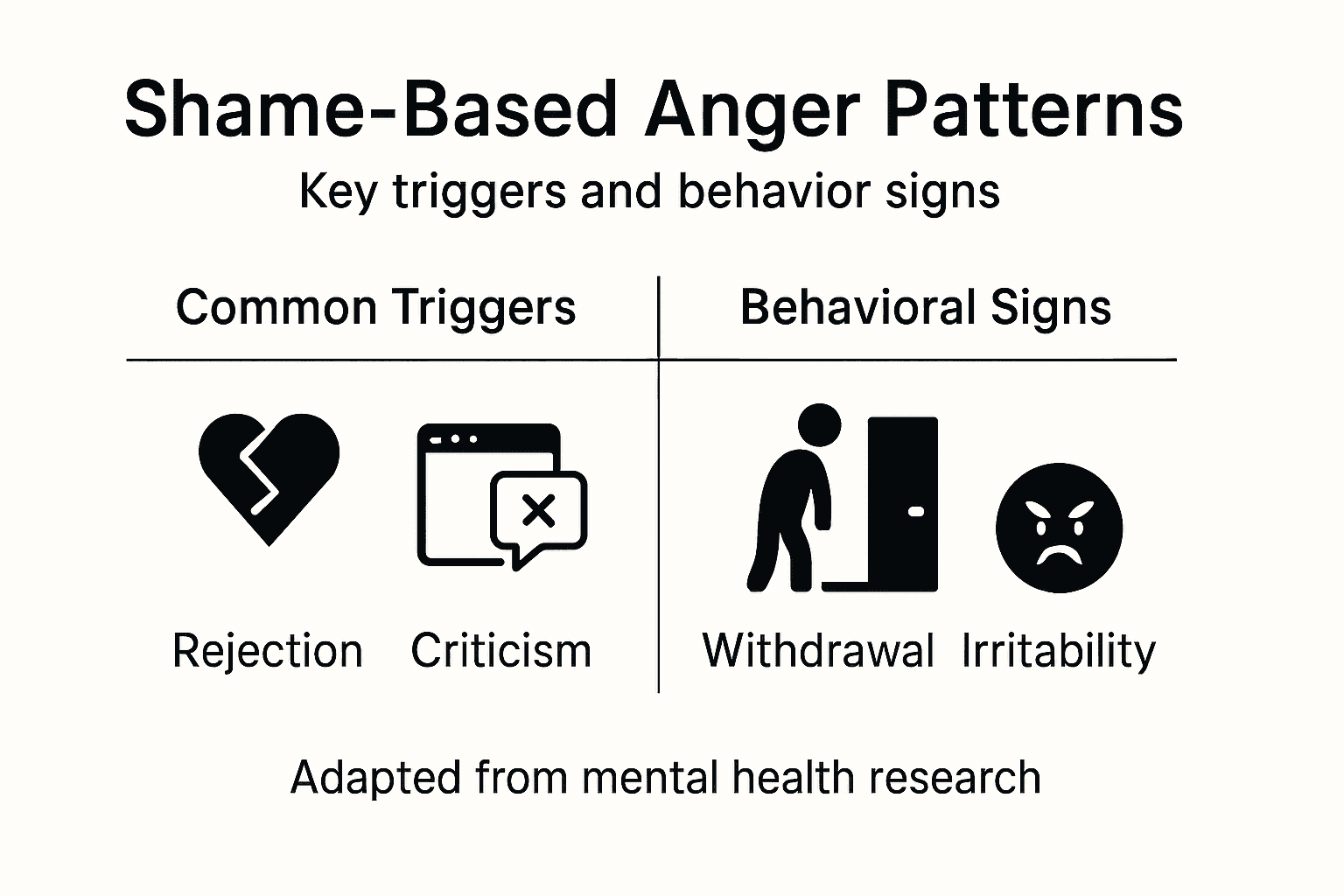
- Social rejection or humiliation
- Perceived personal failures
- Threats to self-esteem
- Experiences of disrespect
- Feeling socially marginalized
Understanding these triggers requires recognizing that shame-based anger is fundamentally a protective psychological mechanism. When individuals feel vulnerable or exposed, anger emerges as a defensive shield, preventing deeper emotional processing and masking underlying feelings of inadequacy.
Psychological Manifestations
Shame-induced anger typically follows predictable psychological pathways:
- Rapid emotional escalation
- Disproportionate reactive responses
- Externalization of internal pain
- Defensive psychological barriers
Shame-based anger is less about the immediate situation and more about protecting a fragile sense of self-worth.
Pro tip: Practice mindful self-reflection to distinguish between genuine anger and shame-driven emotional reactions, allowing for more authentic emotional processing.
Common Behavioral and Emotional Signs
Psychological research on shame dynamics reveals a complex landscape of behavioral and emotional manifestations that characterize shame-based anger. These signs emerge as sophisticated defensive mechanisms designed to protect an individual’s vulnerable sense of self.
Behavioral signs of shame-based anger include:
- Aggressive posturing and unexpected outbursts
- Persistent social withdrawal
- Extreme sensitivity to criticism
- Compulsive blame-shifting
- Passive-aggressive communication patterns
- Sudden emotional escalations
Emotional indicators are equally nuanced and multifaceted:
- Deep feelings of humiliation
- Intense fear of rejection
- Chronic low self-esteem
- Hypersensitivity to perceived social threats
- Unresolved resentment
Psychological Mechanisms
Shame-based anger operates through intricate psychological defense strategies. When individuals feel fundamentally threatened or inadequate, their emotional responses become protective shields, masking deeper vulnerabilities and preventing authentic emotional processing.
Shame-based anger is less about the immediate situation and more about protecting a fragile internal narrative of self-worth.
Pro tip: Develop emotional awareness by practicing non-judgmental self-observation, allowing yourself to recognize shame-driven anger without immediate self-criticism.
Impact on Conflict, Relationships, and Compliance
Interpersonal aggression research demonstrates how shame-based anger profoundly disrupts social functioning and relationship dynamics. The emotional volatility created by shame transforms personal interactions into potential minefields of conflict and misunderstanding.
Key relationship impacts include:
- Persistent communication breakdowns
- Increased emotional distance
- Reduced trust and intimacy
- Higher likelihood of defensive arguments
- Cyclical patterns of conflict escalation
- Difficulty maintaining healthy boundaries
Compliance challenges emerge through multiple psychological mechanisms:
- Resistance to authority figures
- Heightened rejection sensitivity
- Defensive behavioral patterns
- Impaired social adaptation
- Reduced ability to negotiate constructively
Psychological Dynamics
Shame-based anger creates a protective psychological shield that ultimately undermines personal and professional relationships. When individuals feel fundamentally threatened, their defensive responses can transform routine interactions into confrontational experiences.
Shame-based anger destroys connections by converting vulnerability into aggression.
Pro tip: Interrupt shame-driven anger cycles by practicing radical self-compassion and seeking professional guidance to understand underlying emotional triggers.
Risks, Legal Implications, and Management Strategies
Evidence-based anger management approaches reveal complex risks associated with unmanaged shame-based anger, highlighting significant personal and legal consequences that extend far beyond individual emotional experiences.
Critical risks include:
- Potential escalation to physical aggression
- Workplace violence incidents
- Domestic conflict scenarios
- Legal confrontations and potential criminal charges
- Professional reputation damage
- Social relationship disruptions
Legal implications manifest through multiple pathways:
- Potential restraining order requirements
- Mandatory anger management course assignments
- Professional conduct investigations
- Potential employment termination
- Criminal charges in severe cases
Management Strategies
Effective interventions require comprehensive, multidimensional approaches addressing underlying psychological mechanisms. Therapeutic strategies focus on emotional regulation, cognitive restructuring, and developing healthier interpersonal communication skills.
This table summarizes practical intervention strategies for managing anger and their key benefits:
| Strategy | Core Approach | Primary Benefit |
|---|---|---|
| Cognitive Restructuring | Challenge negative self-beliefs | Reduces shame-driven thoughts |
| Emotional Regulation Training | Practice mindfulness techniques | Improves emotional control |
| Communication Skill Building | Learn assertive expression | Reduces conflict and escalation |
| Professional Therapy | Guided emotional exploration | Addresses root emotional wounds |
Shame-based anger management is about transforming emotional vulnerabilities into strengths, not suppressing natural emotional responses.
Pro tip: Seek professional therapeutic support specifically trained in shame-based anger intervention to develop personalized, nuanced coping strategies.
Transform Shame-Based Anger Into Positive Change Today
Struggling with shame-based anger patterns can feel overwhelming as this type of anger often hides deep feelings of worthlessness and vulnerability. This defensive emotional reaction can cause sudden outbursts and disrupt your relationships or work life. At MasteringAnger.com, we understand the complexity behind these emotional dynamics and offer comprehensive anger management classes rooted in evidence-based clinical strategies developed by Dr. Carlos Todd, PhD, LCMHC.
Take control of your emotional responses with our structured online anger management courses and personalized assessments. Whether you are court-ordered, seeking personal growth, or managing workplace challenges, our programs provide the tools to recognize shame-driven anger triggers and develop healthier coping skills. Start your journey toward emotional freedom and improved relationships. Explore the programs and certified educational solutions available at MasteringAnger.com now and receive documentation trusted by courts and employers nationwide.
Frequently Asked Questions
What is shame-based anger?
Shame-based anger is a defensive emotional response triggered by feelings of humiliation, inadequacy, and self-rejection. It serves as a protective mechanism that hides deeper emotional vulnerabilities.
What are the main triggers of shame-based anger?
The primary triggers include social rejection or humiliation, perceived personal failures, threats to self-esteem, experiences of disrespect, and feelings of social marginalization.
How does shame-based anger impact interpersonal relationships?
Shame-based anger can lead to communication breakdowns, increased emotional distance, reduced trust, and heightened conflict in relationships, ultimately disrupting social functioning.
What strategies can help manage shame-based anger?
Effective management strategies include cognitive restructuring to challenge negative beliefs, emotional regulation training to improve emotional control, communication skill building for assertive expression, and professional therapy for exploring underlying emotional wounds.
Recommended
- Behavioral Anger: Causes, Symptoms & Treatment | Masteringanger.com®
- Types of Anger: Which Style is Yours?
- The Difference Between Depression and Anger – Mastering Anger
- Befriending Anger: Transforming Fear into Strength | Masteringanger.com®
Dr. Carlos Todd PhD LCMHC specializes in anger management, family conflict resolution, marital and premarital conflict resolution. His extensive knowledge in the field of anger management may enable you to use his tested methods to deal with your anger issues.



Responses