 English
 Spanish
How to Ask for Help with Anger: A Step-by-Step Guide

Feeling your heart race and fists clench when anger rises can quickly lead to bigger problems, especially if legal or personal consequences are involved. Recognizing your anger triggers and learning how your body responds is the first step to gaining real control. This guide walks you through practical tools to spot warning signs, seek the right support, and confidently start your path to compliance and healthier relationships.
Table of Contents
- Step 1: Identify Warning Signs of Anger Issues
- Step 2: Evaluate Your Need for Professional Support
- Step 3: Prepare to Request Help Effectively
- Step 4: Initiate a Confidential Conversation with a Professional
- Step 5: Verify Successful Connection and Follow-Up
Quick Summary
| Key Point | Explanation |
|---|---|
| 1. Recognize early signs of anger | Pay attention to physiological changes like heart rate and muscle tension to identify anger triggers. |
| 2. Seek professional help if needed | If anger disrupts your life or relationships, consider reaching out to a mental health professional. |
| 3. Prepare for your first consultation | Document your anger experiences and be ready to discuss your triggers clearly with a therapist. |
| 4. Focus on effective communication | During your therapy sessions, be honest about your experiences and ask about treatment options. |
| 5. Track your progress regularly | Maintain a journal to assess improvements in managing anger and refine your coping strategies. |
Step 1: Identify Warning Signs of Anger Issues
Recognizing the early signs of anger issues is crucial for preventing escalation and maintaining healthy relationships. Understanding your unique anger triggers and physical responses can help you develop more effective emotional management strategies.
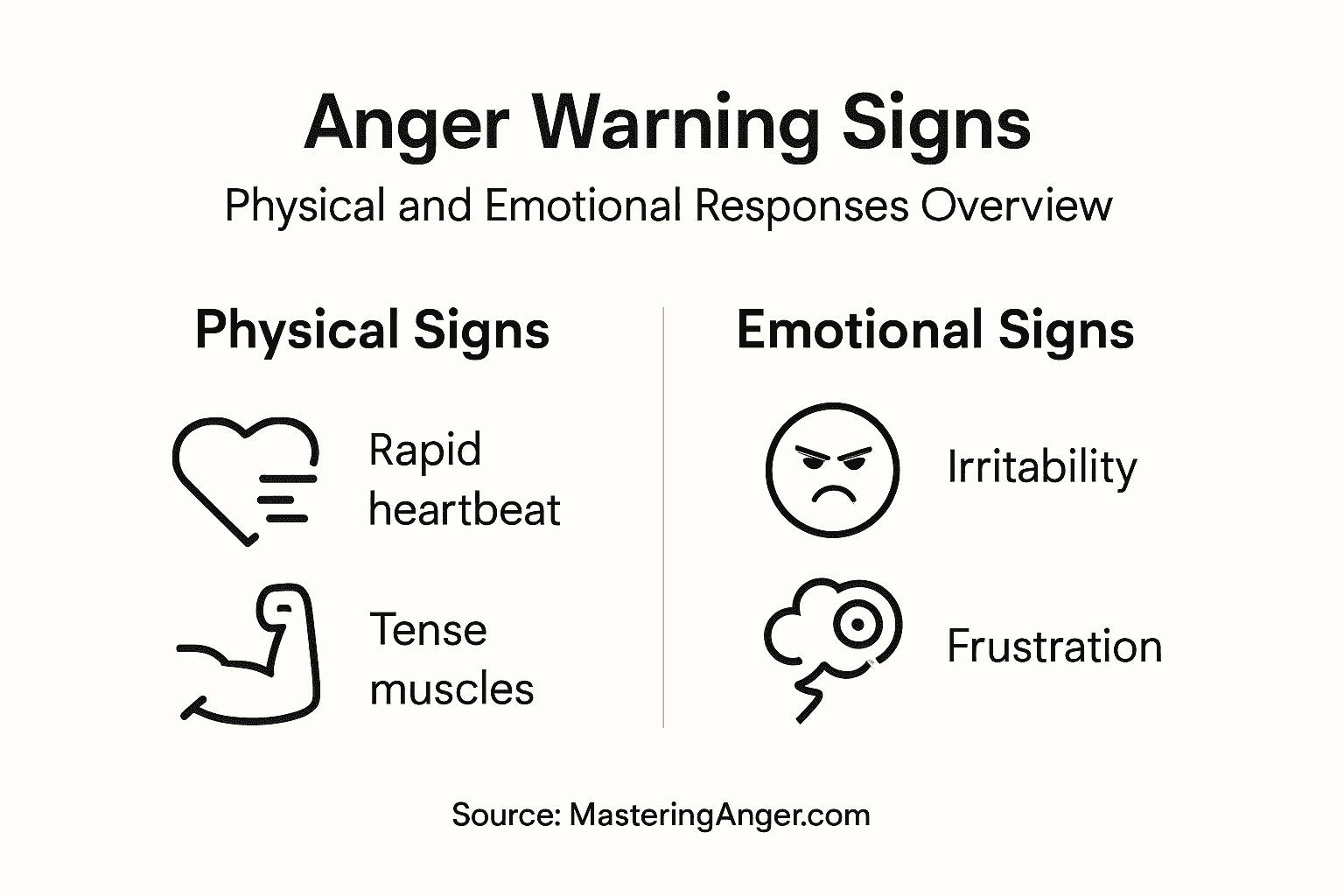
Experts suggest tracking your physiological and behavioral changes when anger begins to build. Understanding anger arousal involves paying attention to several key indicators:
- Increased heart rate
- Muscle tension, especially in shoulders and jaw
- Rapid, shallow breathing
- Clenched fists or jaw
- Feeling heat rising in your body
- Experiencing tunnel vision
- Speaking louder or more aggressively
The warning signs can manifest differently for each person, which is why self-awareness is critical. Physical symptoms often precede emotional outbursts, acting like an internal alarm system. By learning to recognize these signals early, you can interrupt the anger cycle before it spirals out of control.
Your body provides crucial warning signals before an anger episode – learning to read these signals is your first line of emotional defense.
Physical reactions are your body’s way of preparing for a perceived threat. When anger begins to build, your sympathetic nervous system activates, releasing stress hormones like adrenaline. This biological response can trigger aggressive thoughts and impulsive behaviors if left unchecked.
Here’s a quick reference to common physical and emotional changes during anger arousal:
| Change Type | Typical Physical Responses | Typical Emotional Responses |
|---|---|---|
| Early signs | Heart rate rises, muscles tense | Irritability, frustration |
| Peak arousal | Clenched jaw, sweating | Aggressive thoughts |
| Aftermath | Fatigue, calm returns | Regret, sadness |
Pro tip: Keep a daily journal tracking your anger triggers and physical responses to build greater self-awareness and emotional intelligence.
Step 2: Evaluate Your Need for Professional Support
Determining whether you need professional help for anger management is a critical step toward emotional wellness and personal growth. Recognizing signs of professional intervention can help you address potentially destructive anger patterns before they escalate.
Professional support becomes necessary when your anger consistently disrupts your life. Here are key indicators that suggest you might benefit from professional assistance:
- Frequent angry outbursts that feel uncontrollable
- Relationship problems caused by anger
- Experiencing work or social difficulties due to anger
- Physical aggression or threats of violence
- Feeling persistent sadness alongside anger
- Inability to manage anger through self-help strategies
- Experiencing legal consequences related to anger
Seeking professional help is a sign of strength, not weakness. It demonstrates your commitment to personal growth and healthier emotional regulation.
Professional interventions like cognitive behavioral therapy can provide structured strategies to understand and manage your anger. Mental health professionals can help you develop coping mechanisms, identify root causes, and create personalized techniques for emotional control.
This table summarizes professional support options for anger management and their potential benefits:
| Support Option | Main Approach | Expected Benefit |
|---|---|---|
| Cognitive Behavioral Therapy | Structured exercises | Improved emotional control |
| Group Counseling | Peer interaction | Shared perspectives |
| One-on-One Therapy | Personalized sessions | Tailored coping strategies |
Pro tip: Schedule an initial consultation with a therapist specializing in anger management to discuss your specific challenges and potential treatment approaches.
Step 3: Prepare to Request Help Effectively
Successfully seeking help for anger management requires thoughtful preparation and self-awareness. Practical steps for anger management can help you approach professional support with confidence and clarity.
Before reaching out for help, take time to gather important information about your anger experiences. Preparing effectively involves several key strategies:
- Document specific anger triggers and patterns
- Track the frequency and intensity of your anger episodes
- Note physical and emotional reactions during anger
- Identify potential underlying stressors or emotional roots
- Prepare specific examples of how anger impacts your life
- Research potential therapy approaches or support groups
- Gather relevant medical or personal history
Honest self-reflection is the foundation of effective anger management. Your willingness to understand yourself is the first step toward meaningful change.
Effective preparation means being ready to communicate openly with a professional. This involves practicing vulnerability, understanding that seeking help demonstrates strength, not weakness. Mental health professionals are trained to provide supportive, non-judgmental guidance tailored to your unique emotional landscape.

Pro tip: Create a brief written summary of your anger experiences to help you communicate clearly and confidently during your first consultation.
Step 4: Initiate a Confidential Conversation with a Professional
Starting a conversation about your anger challenges requires courage and strategic communication. Effective mental health communication can help you build a supportive relationship with a professional who can guide your healing journey.
To initiate a confidential and productive conversation, consider these essential strategies:
- Choose a private, comfortable communication setting
- Request a confidential initial consultation
- Prepare a clear, concise description of your experiences
- Be honest about your anger triggers and concerns
- Ask about the therapist’s experience with anger management
- Discuss potential treatment approaches
- Clarify confidentiality policies and boundaries
Confidentiality is your right. A professional counselor is committed to creating a safe, judgment-free space for your healing.
Emotional vulnerability requires trust. When discussing your anger, focus on being direct yet compassionate with yourself. Mental health professionals are trained to listen without judgment and help you develop constructive strategies for emotional regulation.
Pro tip: Write down three specific goals you want to achieve through anger management before your first consultation to help guide the conversation.
Step 5: Verify Successful Connection and Follow-Up
Successfully managing anger requires ongoing commitment and intentional progress tracking. Mental health support strategies can help you maintain momentum and continuously improve your emotional regulation skills.
To ensure you’re making meaningful progress in your anger management journey, implement these critical follow-up strategies:
- Schedule regular check-in sessions with your therapist
- Track your emotional responses and anger triggers
- Document improvements in your interpersonal relationships
- Review and adjust your anger management techniques
- Assess the effectiveness of learned coping mechanisms
- Be open to modifying your treatment approach
- Maintain consistent communication with your support professional
Progress is not linear. Embrace each step forward, recognizing that healing takes time and consistent effort.
Ongoing communication is key to successful anger management. Your therapist can help you refine strategies, identify emerging patterns, and provide targeted guidance as you develop more effective emotional regulation skills.
Pro tip: Create a monthly self-assessment journal to objectively track your anger management progress and share insights with your therapist.
Take Control of Your Anger Today with Professional Guidance
The article “How to Ask for Help with Anger Step-by-Step Guide” highlights the challenge of recognizing physical and emotional warning signs of anger and knowing when to seek professional support. If you find yourself facing uncontrollable outbursts or struggling to communicate your needs effectively, you are not alone. Many individuals share the common goal of developing healthier emotional regulation and building trust in confidential therapy settings. This journey begins with understanding your anger triggers and preparing to ask for help with confidence.
MasteringAnger.com offers comprehensive, evidence-based anger management solutions tailored to meet legal, workplace, and personal growth needs. Our structured online anger-management classes are designed from the clinical curriculum by Dr. Carlos Todd, a nationally recognized mental health expert. We provide clear diagnostic assessments and court-accepted certification so you can meet your requirements with integrity and professionalism.
If you are ready to break the cycle of frustration and regain control over your emotional responses, start with our trusted programs at MasteringAnger.com. Prepare for your healing journey with confidence through detailed anger and conflict assessments and choose from online classes ranging from 4 to 52 hours based on your needs. Take the first step toward positive change now by visiting our site and securing the support that supports your goals and legal requirements.
Frequently Asked Questions
How do I identify my anger triggers?
Recognizing your anger triggers involves self-reflection and awareness. Keep a daily journal to document situations that provoke anger and your physical responses, aiming to identify patterns within the next month.
What should I do if I feel my anger is uncontrollable?
If your anger feels overwhelming and disruptive, consider seeking professional help. Schedule an initial consultation with a therapist specializing in anger management to discuss your experiences and explore treatment options.
How can I prepare for an initial consultation about my anger?
To prepare for your first consultation, gather information about your anger experiences, including triggers and past episodes. Create a notes outline that includes your concerns and specific questions to discuss with the therapist.
What steps can I take to communicate effectively with a therapist about my anger?
Choose a private setting for your conversation and be clear and concise when describing your experiences and triggers. Practice being honest and open to create a trustful environment for your healing journey.
How will I know if my anger management strategies are working?
Monitor your emotional responses and relationship dynamics over time to gauge improvement. Track your progress through a monthly self-assessment journal, making adjustments to your techniques as needed to ensure continuous growth.
What are the benefits of seeking professional support for anger management?
Professional support offers tailored strategies and coping mechanisms, empowering you to understand and manage your anger effectively. Engaging in regular therapy sessions can lead to improved emotional regulation and healthier relationships, especially within the first few months.
Recommended
- Anger Issues: Causes, Symptoms, and Management Strategies
- 8 Ways Deal with Children’s Anger – Mastering Anger
- Befriending Anger: Transforming Fear into Strength | Masteringanger.com®
- 10 Best Anger Management Books | Masteringanger.com®
- Pete Ketchum | Organizational Psychologist & Author
- Pete Ketchum | Organizational Psychologist & Author
Dr. Carlos Todd PhD LCMHC specializes in anger management, family conflict resolution, marital and premarital conflict resolution. His extensive knowledge in the field of anger management may enable you to use his tested methods to deal with your anger issues.



Responses