 English
 Spanish
Anger Management Curriculum Explained: Structure and Impact

Facing a court mandate or work requirement for anger management can feel overwhelming, especially when the expectations are strict and the process unfamiliar. The need for a structured, legally compliant solution is real, whether your goal is to satisfy a United States legal directive or meet professional standards. This guide breaks down the essentials of anger management curriculum and legal compliance, giving you clear direction on course options, documentation, and proven strategies for effective emotional regulation.
Key Takeaways
| Point | Details |
|---|---|
| Understanding Anger Management | Anger management educates individuals on recognizing triggers and managing emotions constructively rather than suppressing them. |
| Types of Courses Available | A variety of formats exist, including individual counseling, group workshops, and online courses, each tailored to specific audiences and needs. |
| Court-Approved Programs | These programs ensure legal compliance through structured curricula, mandatory assessments, and certified instruction for participants mandated to attend. |
| Importance of Documentation | Comprehensive records and official certificates are crucial for legal validation and participant accountability within anger management programs. |
Defining Anger Management Curriculum and Purpose
Anger management is a structured psychological approach designed to help individuals understand, recognize, and effectively control their emotional responses. At its core, an anger management curriculum provides a comprehensive framework for transforming destructive anger patterns into healthy emotional regulation strategies.
The fundamental purpose of anger management education is to teach individuals how to recognize and manage emotional triggers. These programs are not about suppressing anger, but rather understanding its root causes and developing constructive ways to express emotions. Anger is a normal human emotion – the goal is learning to channel it productively without causing harm to oneself or others.
Key components of an effective anger management curriculum typically include:
- Identifying personal anger triggers
- Understanding the physiological response to anger
- Learning cognitive restructuring techniques
- Developing healthy communication skills
- Practicing stress reduction methods
- Building emotional intelligence
- Implementing conflict resolution strategies
Professional anger management programs often utilize a multidisciplinary approach that combines psychological assessment, cognitive behavioral techniques, and practical skill-building. Psychological interventions are carefully designed to help participants gain self-awareness, emotional control, and more adaptive behavioral responses.
Pro tip: Practice self-reflection by maintaining an anger journal to track emotional patterns and identify underlying triggers before they escalate.
Types of Anger Management Courses Offered
Anger management courses provide diverse educational approaches to help individuals develop emotional regulation skills. These programs range from brief interventions to comprehensive training designed to address various personal and professional contexts. Online anger management courses have become increasingly popular, offering flexible learning options for individuals seeking to improve their emotional intelligence.
The most common types of anger management courses include:
- Individual Counseling Sessions: One-on-one therapeutic interventions focused on personalized emotional strategy development
- Group Workshop Programs: Interactive sessions allowing participants to learn from shared experiences
- Court-Mandated Classes: Structured programs designed for legal compliance and behavioral modification
- Corporate Training Programs: Workplace-focused courses addressing professional communication and conflict resolution
- Online Self-Paced Courses: Digital learning platforms providing flexible, confidential skill-building opportunities
- Couples and Family Therapy Courses: Specialized programs targeting interpersonal relationship dynamics
Each course type employs different methodologies to help participants understand their anger triggers, develop coping mechanisms, and improve overall emotional intelligence. Cognitive behavioral techniques are frequently utilized across various course formats, helping individuals recognize and reframe destructive thought patterns.
Professional anger management courses typically range from 4 to 52 hours, with content complexity increasing proportionally to the course duration. Participants can expect to learn practical skills such as stress management, communication techniques, and emotional self-regulation strategies.

Here is a comparison of common anger management course formats and their ideal audiences:
| Course Format | Delivery Method | Best For |
|---|---|---|
| Individual Counseling | One-on-one sessions | Personalized strategies seekers |
| Group Workshops | In-person group meetings | Peer learning and support |
| Online Courses | Self-paced digital modules | Flexible, remote access |
| Court-Mandated Classes | Structured, monitored format | Legal compliance needs |
| Family Therapy | Joint sessions with loved ones | Improving home relationships |
Pro tip: Select an anger management course that matches your specific learning style and personal goals for maximum effectiveness.
How Court-Approved Programs Operate
Court-approved anger management programs serve a critical role in the legal system, providing structured interventions designed to address behavioral challenges and promote personal accountability. Court-approved treatment providers operate under strict guidelines to ensure comprehensive, effective support for individuals mandated to complete anger management training.
The key operational characteristics of these programs typically include:
- Mandatory Assessment: Comprehensive initial psychological screening
- Structured Curriculum: Standardized educational modules addressing anger triggers
- Progress Tracking: Detailed documentation of participant engagement and improvement
- Legal Compliance Reporting: Regular updates to courts or probation officers
- Certified Instruction: Training delivered by licensed mental health professionals
- Individualized Intervention Strategies: Tailored approaches based on participant needs
Comprehensive Documentation is a hallmark of court-approved programs. Participants receive detailed certificates of completion that courts and legal representatives can verify, ensuring transparency and accountability throughout the intervention process.
These programs are carefully designed to meet specific legal requirements while providing meaningful behavioral intervention. Participants typically undergo a structured process that includes initial assessment, skill-building workshops, individual counseling, and ongoing progress monitoring to demonstrate positive behavioral changes.
Pro tip: Always request and retain official documentation of your program completion to satisfy legal and professional requirements.
Assessment Tools and Course Placement
Anger management programs rely on sophisticated assessment tools and cognitive techniques to determine the most appropriate intervention strategy for each participant. These evaluation methods go beyond simple questionnaires, providing a comprehensive understanding of an individual’s emotional patterns and potential risk factors.
The primary components of anger management assessments typically include:
- Psychological Screening: Standardized questionnaires measuring anger intensity
- Behavioral Analysis: Detailed evaluation of emotional response patterns
- Risk Assessment: Identification of potential escalation triggers
- Communication Style Evaluation: Analysis of interpersonal conflict strategies
- Emotional Intelligence Mapping: Assessment of self-regulation capabilities
- Trauma and Background Screening: Understanding underlying emotional contexts
Personalized Course Placement is the critical outcome of these comprehensive assessments. Professionals use multi-dimensional evaluation tools to recommend course lengths ranging from 4 to 52 hours, ensuring that each participant receives targeted intervention matching their specific emotional regulation needs.
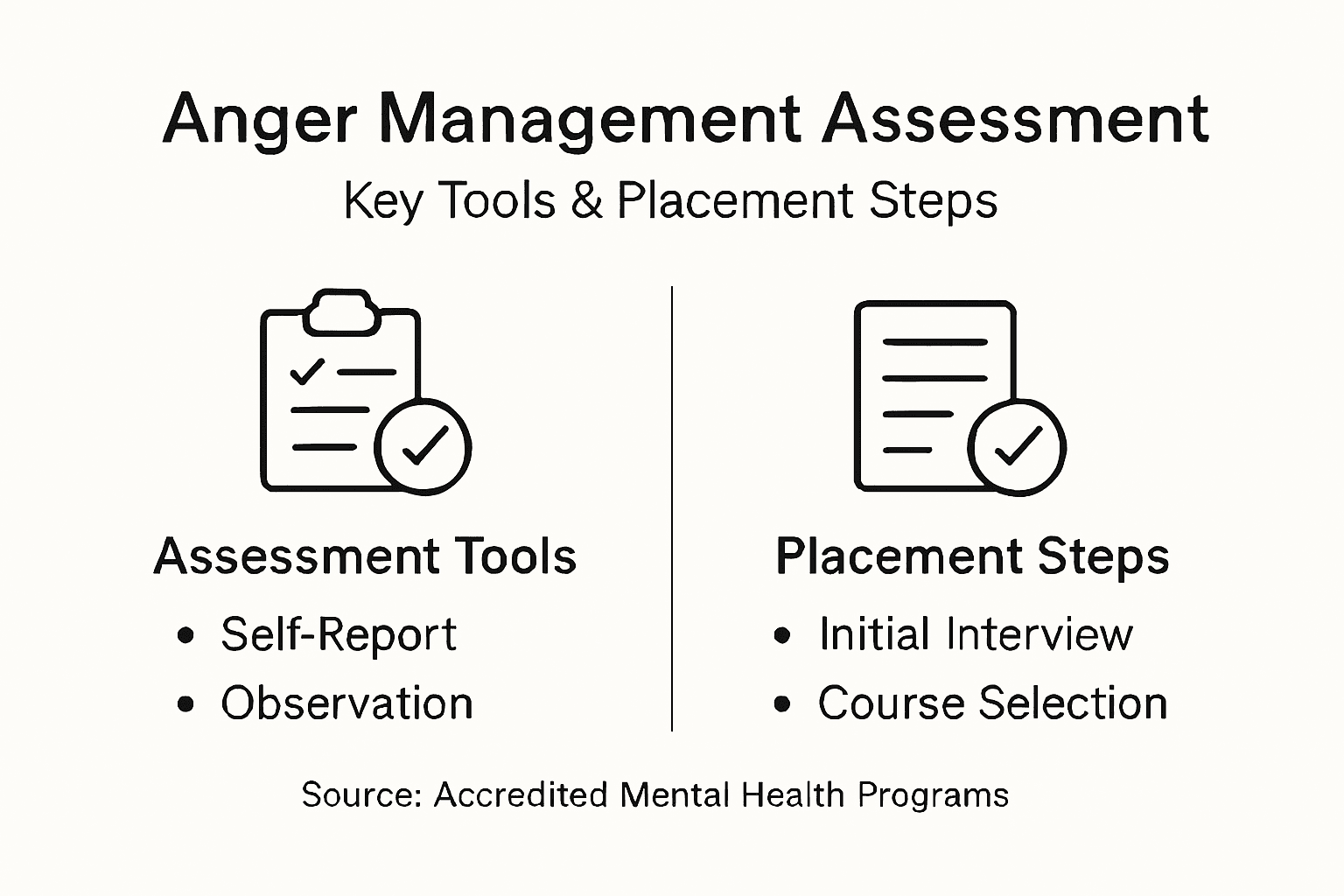
The assessment process involves multiple stages of evaluation, including self-reporting, professional observation, and standardized psychological instruments. This thorough approach allows anger management specialists to create highly individualized treatment plans that address the unique emotional challenges of each participant.
Pro tip: Be honest and transparent during your initial assessment to ensure the most accurate and beneficial course placement.
Legal Documentation and Compliance Requirements
Anger management programs must adhere to stringent legal documentation standards that ensure transparency, accountability, and legal compliance. These requirements protect both participants and providers by maintaining comprehensive records of program participation, progress, and completion.
Key documentation and compliance elements include:
- Participant Registration Records: Detailed intake forms and personal information
- Progress Tracking Documentation: Systematic logs of participant engagement and improvement
- Attendance Verification: Precise records of course participation and completion
- Professional Credentialing: Verification of instructor qualifications
- Confidentiality Protocols: Strict privacy protection measures
- Standardized Reporting Formats: Consistent documentation acceptable to courts and legal entities
Certification and Reporting are critical components of legal compliance. Each anger management program must generate official certificates that include specific details such as total course hours, participant identification, and verification mechanisms acceptable to courts, probation officers, and legal representatives.
The documentation process involves multiple layers of verification, ensuring that every aspect of the anger management intervention can be independently validated. This comprehensive approach provides legal entities with confidence in the program’s effectiveness and the participant’s commitment to behavioral improvement.
This table summarizes key legal compliance aspects of anger management programs:
| Compliance Aspect | Purpose | Stakeholder Benefit |
|---|---|---|
| Registration Records | Verify participant identity | Ensures proper enrollment |
| Attendance Verification | Track course completion | Satisfies court mandates |
| Certification | Validate program fulfillment | Accepted by legal parties |
| Confidentiality Protocols | Protect personal data | Builds participant trust |
Pro tip: Request and retain multiple copies of your official course completion documentation for legal and professional records.
Take Control With Expert Anger Management Support
The article outlines the challenges many face when struggling to recognize and manage their anger triggers and develop healthy emotional regulation strategies. If you find yourself needing structured guidance to overcome destructive anger patterns, it is essential to choose a program grounded in clinical expertise and court-accepted standards. Key pain points like understanding physiological responses, cognitive restructuring, and legal compliance all demand a professional approach tailored to your unique situation.
MasteringAnger.com offers a trusted platform backed by Dr. Carlos Todd, a licensed mental-health counselor who has provided evidence-based anger management courses since 2009. These courses range from 4 to 52 hours, designed to meet the needs of individuals required to complete court-approved programs or those seeking personal and professional growth. Using standardized psychological assessments to place you in the best-suited course, the platform issues legally recognized certificates accepted by courts, attorneys, and employers alike.
Start transforming your emotional responses today by visiting MasteringAnger.com and exploring our anger management classes. Take the first step toward lasting change and gain access to comprehensive training, detailed legal documentation, and professional support tailored to your goals. Join thousands across the United States who have regained control over their anger through clinically proven methods.
Frequently Asked Questions
What is the main purpose of an anger management curriculum?
The main purpose of an anger management curriculum is to help individuals recognize and manage their emotional triggers, transforming destructive anger patterns into healthy emotional regulation strategies.
What are the key components of an effective anger management program?
Key components typically include identifying personal anger triggers, understanding physiological responses to anger, learning cognitive restructuring techniques, developing healthy communication skills, practicing stress reduction methods, building emotional intelligence, and implementing conflict resolution strategies.
How does a court-approved anger management program operate?
Court-approved anger management programs operate under strict guidelines, requiring mandatory assessments, a structured curriculum, progress tracking, legal compliance reporting, certified instruction, and individualized intervention strategies to promote accountability and behavioral change.
What types of anger management courses are available?
Available types of anger management courses include individual counseling sessions, group workshops, court-mandated classes, corporate training programs, online self-paced courses, and family therapy courses, each designed to meet varying personal and professional needs.
Recommended
- Anger Management Training for Employees | Mastering Anger
- Anger Arousal: How to Track & Transform Your Triggers | Masteringanger.com®
- Mastering Anger Blog
- How To Use Mindfulness To Cope with Anger? | Masteringanger.com®
- Qué es inglés conversacional y su impacto real – Academia Atenea
Dr. Carlos Todd PhD LCMHC specializes in anger management, family conflict resolution, marital and premarital conflict resolution. His extensive knowledge in the field of anger management may enable you to use his tested methods to deal with your anger issues.