
 English
 Spanish

Why Control Anger: Legal, Emotional, and Social Impact

Feeling court-ordered into an anger management course can be overwhelming, especially when misconceptions about anger cloud your judgment. Many assume anger is always destructive, but experts confirm it is a complex emotional state with survival functions and various manifestations. For American adults fulfilling legal requirements, understanding the difference between anger and aggression is critical. This guide unpacks the truth behind anger, explains its legal relevance, and shows how certified online programs help you regain control while meeting court standards.
Table of Contents
- What Anger Is and Common Misconceptions
- Types of Anger and Their Legal Relevance
- How Uncontrolled Anger Affects Mental Health
- Court-Mandated Anger Management Requirements
- Risks of Non-Compliance and Personal Consequences
Key Takeaways
| Point | Details |
|---|---|
| Anger is Complex | Anger is a complex emotional state that signals perceived threats and motivates action but should not be confused with aggression. |
| Types of Anger Matter | Distinguishing between hostile and instrumental anger influences legal assessments and rehabilitation strategies. |
| Mental Health Impacts | Uncontrolled anger can lead to significant mental health issues, increasing the risk of depression and anxiety. |
| Importance of Compliance | Adhering to court-mandated anger management is vital to avoid legal consequences and improve personal well-being. |
What Anger Is and Common Misconceptions
Anger isn’t the destructive explosion you see in movies. It’s a complex emotional state involving specific feelings, physical sensations, and thoughts that arise when you perceive a threat, injustice, or provocation. Your heart rate increases. Your muscles tense. Your mind focuses intensely on what triggered you. This is anger operating as it’s designed to operate.
What many people don’t realize is that anger as an emotion is fundamentally different from aggression. Anger is what you feel internally. Aggression is what you do externally. You can be furious without throwing a punch or saying a harsh word. You can also act aggressively without feeling angry at all. Understanding this distinction matters, especially when court systems evaluate your behavior and capacity for impulse control.
Anger actually serves survival functions. It signals that your boundaries have been crossed, that something demands your attention, or that you need to take action. In the right doses, anger motivates you to stand up for yourself, protect what matters, and solve problems. The problem emerges when anger becomes chronic, uncontrolled, or directed at the wrong targets. That’s when relationships fracture and legal consequences follow.
Here’s where misconceptions trip people up. Many believe anger should be completely suppressed, locked away as though it’s inherently evil. Others think any expression of anger is acceptable. Neither is true. Uncontrolled anger can harm both your health and relationships, yet appropriate anger management allows you to acknowledge what you’re feeling while choosing constructive responses.
Another common misunderstanding: that angry people are simply aggressive or bad people. That’s false. Anger appears across all personality types and circumstances. Someone court-ordered for anger management isn’t necessarily violent or dangerous. They’re someone whose emotional regulation habits need recalibration. That’s entirely changeable with awareness and practice.
Pro tip: Stop thinking of anger as something to eliminate entirely. Instead, view it as data—your internal alarm system telling you something matters. Learning to read that signal without acting impulsively is exactly what effective anger management teaches.
Types of Anger and Their Legal Relevance
Not all anger works the same way, and courts understand this distinction better than most people realize. Anger breaks down into two primary types based on how it functions: hostile anger and instrumental anger. These categories matter legally because they reveal intent, which directly influences how judges and probation officers evaluate your case.
Hostile anger is reactive and driven by emotion. Someone cuts you off in traffic. Your blood boils. You honk aggressively or yell without thinking through consequences. This type of anger aims to harm or punish the offender. Hostile aggression often connects to crimes involving violence or retaliation, which is why courts take it seriously. When you’re court-ordered for anger management, hostile anger patterns are frequently the behavior that triggered the legal system’s involvement.
Instrumental anger operates differently. It’s calculated and goal-oriented. Someone plans to hurt another person or damage property to gain something, whether money, power, or control. This premeditated anger can involve fraud, theft, or deliberate harm. Courts view instrumental aggression as particularly concerning because it demonstrates planning and intent to cause harm for personal benefit. The distinction matters: reactive versus calculated changes how legal systems assess dangerousness and rehabilitation potential.
Here’s how the two main types of anger compare in legal contexts:
| Type of Anger | Typical Triggers | Legal Significance | Example Behavior |
|---|---|---|---|
| Hostile Anger | Emotional provocation | Suggests impulse issues | Road rage or verbal outburst |
| Instrumental Anger | Planned goal pursuit | Signals intent to harm | Premeditated property damage |
Beyond these categories, anger manifests through different behavioral channels. Physical aggression harms someone’s body. Relational aggression damages social relationships through gossip, exclusion, or manipulation. You might express anger through one channel or multiple channels depending on the situation and your patterns.
Why does this matter for your court-mandated program? Courts use anger management as an educational and rehabilitative tool specifically designed to address these patterns and reduce recidivism. Understanding which type of anger dominates your behavior helps you and your instructor target the right strategies. Someone whose anger is primarily hostile needs different tools than someone whose anger is instrumental and calculated.
Pro tip: Before your anger management course, reflect honestly on whether your anger erupts in the moment or whether you’ve planned harmful actions. This self-awareness signals to courts and instructors that you’re taking accountability seriously, which directly influences how your progress is evaluated.
How Uncontrolled Anger Affects Mental Health
Uncontrolled anger doesn’t just damage your relationships or legal standing. It actively harms your mental health in ways that compound over time. When you suppress anger or let it explode repeatedly, your mind pays a steep price, creating patterns that become increasingly difficult to break without intervention.
Anger and depression are deeply interconnected. When you direct anger inward, criticizing yourself or obsessing over perceived failures, you damage your self-esteem and create a vicious cycle. Conflicts around anger can trigger guilt, self-criticism, and intrapsychic conflicts, which worsens depressive symptoms significantly. Many people in court-ordered anger management programs don’t realize they’re also struggling with undiagnosed depression fueled by unresolved anger patterns.
Your body responds to chronic anger with measurable physical consequences. Anger episodes flood your system with stress hormones. Brief bouts of anger can impair blood vessel function, potentially contributing to long-term cardiovascular health risks. This physiological impact combines with emotional distress to create stress-related disorders and increase anxiety. You’re not just feeling bad mentally. Your nervous system is being damaged repeatedly.

The combination creates a dangerous mental health spiral. Untreated anger issues exacerbate existing mental health disorders and complicate recovery. You might start anxiety medication or therapy, but if your underlying anger patterns remain unaddressed, progress stalls. The anger keeps feeding the anxiety. The anxiety makes anger harder to control. Without deliberate intervention, this cycle intensifies.
Review these common impacts of uncontrolled anger and their effects:
| Impact Area | Short-Term Effect | Long-Term Consequence |
|---|---|---|
| Relationships | Increased conflict, isolation | Loss of trust, ongoing estrangement |
| Mental Health | Heightened anxiety, guilt | Risk of chronic depression |
| Physical Health | Elevated heart rate, stress | Cardiovascular disease risk |
| Legal Standing | More infractions or sanctions | Probation violation, potential jail |
Managing anger becomes crucial mental health work. When you learn to recognize, regulate, and respond to anger constructively, you interrupt the cycle. Your self-esteem stabilizes. Anxiety decreases. Depression loses its fuel. This is why anger management isn’t just about legal compliance. It’s about protecting your psychological well-being and breaking patterns that damage your mental health.
Pro tip: Track your mood and anger patterns for one week before starting your course. Notice when anger spikes and how it affects your anxiety or depressive symptoms. This awareness helps you see connections you might otherwise miss, making your anger management work more targeted and effective.
Court-Mandated Anger Management Requirements
If you’re reading this, you likely know the court system has ordered you into an anger management program. This isn’t punishment in the traditional sense. It’s a structured intervention designed to change your behavior and reduce the likelihood you’ll face legal consequences again. Understanding what’s actually required helps you approach it strategically.
Court orders typically specify exact requirements. You need to complete a certain number of hours, attend sessions by specific deadlines, and obtain documentation proving completion. The court wants verification. Not a casual certificate. Legitimate documentation with provider credentials, company identification numbers, and contact information that allows the court to independently verify you actually completed the program.
Anger management programs aim to reduce violent behavior and prevent recidivism by focusing on structured educational and therapeutic sessions. Your assigned program length depends on your specific case, criminal history, and the severity of the incident that triggered the court order. Someone arrested for domestic violence might need 24 hours. Someone with a longer record might face 52 hours. The assessment determines the fit.
The sessions themselves focus on recognizing anger patterns, understanding triggers, and learning practical regulation techniques. You’ll examine your specific anger style, explore how you express anger behaviorally, and practice alternative responses. This isn’t group therapy where you’re processing emotions. It’s skills training where you’re learning concrete techniques to manage your behavior before escalation occurs.
Completion isn’t optional. Missing sessions, dropping out partway through, or submitting forged certificates creates new legal problems. Probation officers track your progress. Courts receive completion reports. One missed session can become a probation violation. Your anger management course becomes the bridge between where you are now and where you need to be legally.
Pro tip: Schedule all your sessions immediately when you receive your court order, treating them with the same priority as court appearances. Completing your program early demonstrates commitment to the court and removes the stress of looming deadlines, which paradoxically helps you manage anger more effectively during the process.
Risks of Non-Compliance and Personal Consequences
Non-compliance with court-mandated anger management isn’t a minor issue you can ignore and hope disappears. The consequences are real, immediate, and escalate quickly. Understanding what’s actually at stake helps you recognize why following through matters far beyond just appeasing the court.
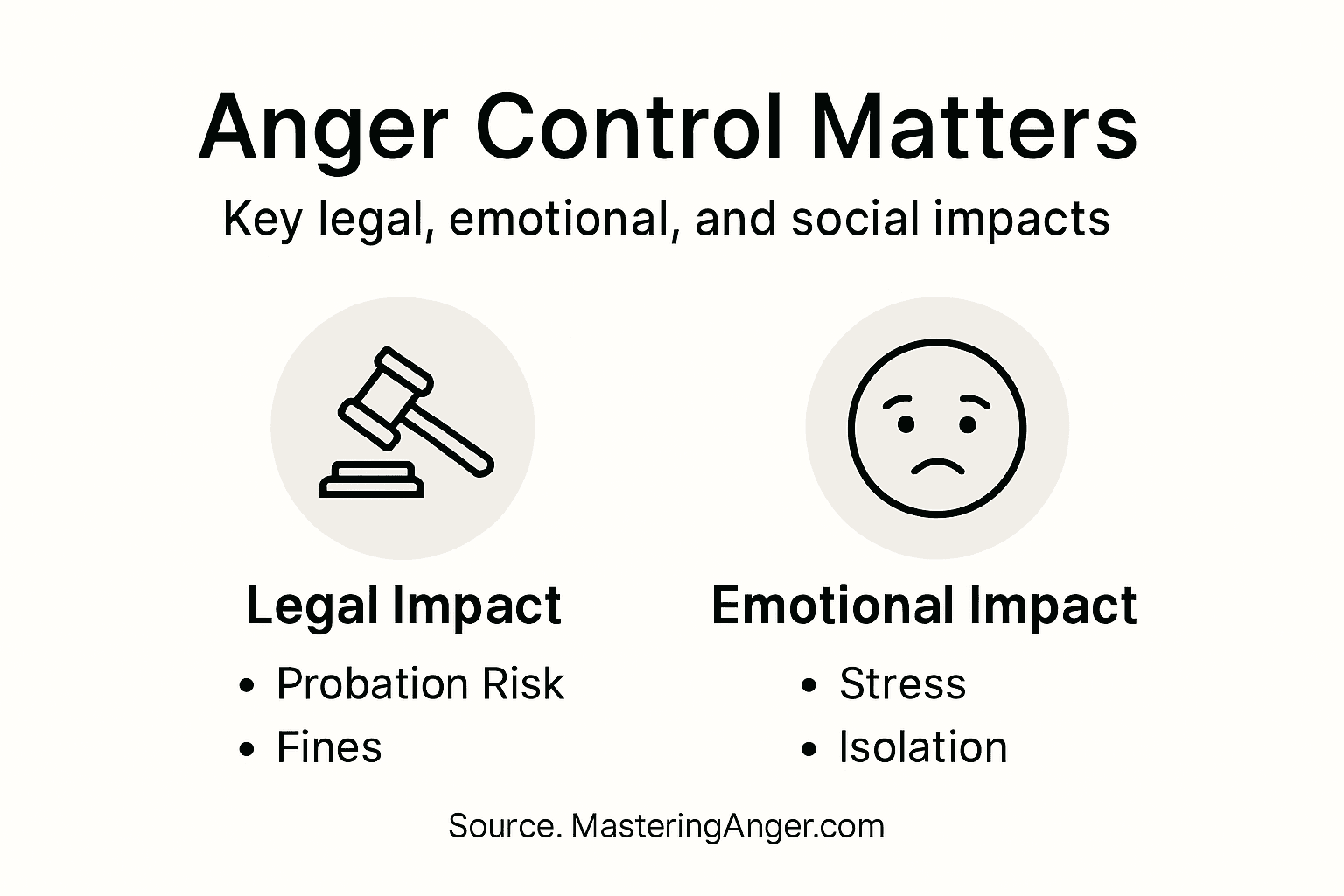
Legal consequences arrive first and hit hardest. Missing sessions or failing to complete your program constitutes a probation violation. Your probation officer files a report. The court schedules a violation hearing. You could face additional fines, extended probation, or incarceration. What started as a requirement to attend anger management transforms into a criminal violation with jail time as the penalty. One missed appointment can unravel your entire legal standing.
Uncontrolled anger can lead to health problems including high blood pressure and heart disease, and non-compliance signals that you haven’t addressed the underlying patterns. Within correctional and probation systems, failure to engage with anger management programs correlates with higher rates of infractions and rearrests. You’re essentially telling the court that nothing has changed. That you’re the same person who caused the initial problem.
Beyond legal ramifications, your personal life suffers. Employers increasingly ask about background checks and legal compliance. Housing applications scrutinize probation status. Custody arrangements hinge on demonstrating behavioral change. Non-compliance demonstrates the opposite. It shows you’re unwilling to invest effort in self-improvement even when the court mandates it.
Your mental health also deteriorates when anger remains unmanaged. Continued uncontrolled anger exacerbates anxiety and depression. Relationships stay fractured. Opportunities remain closed. The anger management program wasn’t designed to punish you. It was designed to give you tools to change the trajectory of your life. Rejecting that offer has consequences that extend far beyond the courtroom.
Pro tip: Document your completion progress with screenshots and emails confirming each session attended. When you submit your final certificate, include a brief note explaining specific anger management techniques you’ve practiced and how they’ve changed your responses to triggering situations. This demonstrates genuine engagement, not just compliance.
Take Control of Your Anger to Protect Your Future
The challenge of managing anger in ways that satisfy legal, emotional, and social demands is a real and immediate concern. This article shows how uncontrolled anger leads to severe legal consequences, damaged relationships, and mental health struggles like anxiety and depression. If you are facing court-ordered anger management or want to regain control before anger impacts your life further, professional guidance is essential. Terms like hostile anger, instrumental anger, and impulsive behavior highlight the complexity of this issue and the need for tailored strategies to break the cycle.
MasteringAnger.com offers evidence-based, court-accepted anger-management programs designed specifically to meet these challenges. Led by Dr. Carlos Todd, a licensed mental-health counselor with national recognition, our platform provides flexible course lengths from 4 to 52 hours all backed by psychological assessments that identify your specific anger patterns. Completing these programs not only fulfills court requirements but also equips you with skills to manage anger healthily and prevent costly legal complications. Visit MasteringAnger.com to start your journey today and explore our options for Anger Management Classes and Anger & Conflict Assessments.
Take action now to turn anger into constructive energy and show the court and yourself that you are committed to lasting change.
Frequently Asked Questions
What is the difference between anger and aggression?
Anger is an internal emotional state that you feel, while aggression is the external expression of that anger. You can feel angry without acting aggressively, and understanding this distinction is crucial for managing your emotions effectively.
How can uncontrolled anger impact my mental health?
Uncontrolled anger can lead to heightened anxiety, depression, and stress-related disorders. It creates a cycle where unresolved anger exacerbates mental health issues, making them harder to manage over time.
What are the legal implications of not complying with a court-mandated anger management program?
Failing to comply with a court-mandated anger management program can result in probation violations, additional fines, or even jail time. Non-compliance can adversely affect your legal standing and life opportunities.
What is the purpose of anger management programs?
Anger management programs are designed to help individuals recognize their anger patterns, understand triggers, and learn practical techniques to regulate their emotions, ultimately aiming to reduce violent behavior and prevent recidivism.
Recommended
- Anger Issues: Causes, Symptoms, and Management Strategies
- The Difference Between Anger and Self-Talk | Masteringanger.com®
- Types of Anger: Which Style is Yours?
- Is Anger a Choice or Not? Let’s Find Out | Mastering Anger
Dr. Carlos Todd PhD LCMHC specializes in anger management, family conflict resolution, marital and premarital conflict resolution. His extensive knowledge in the field of anger management may enable you to use his tested methods to deal with your anger issues.



Responses