 English
 Spanish
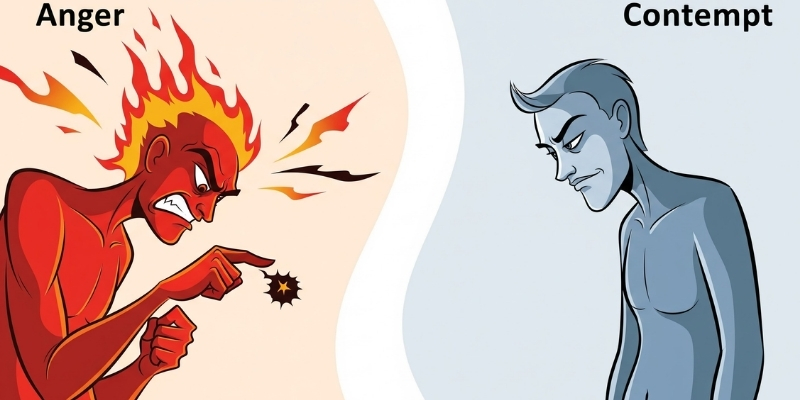
Contempt vs Anger: What Are the Differences?

Every relationship has conflict. Feeling frustrated or angry with your partner is a normal part of sharing a life together. However, not all negative emotions are created equal.
While anger can be a loud, obvious fire, contempt is a slow, corrosive poison. Understanding the critical difference between contempt vs anger is not just academic; it can determine the very survival of your relationship.
Decades of rigorous scientific research, most notably by psychologist Dr. John Gottman, have identified one emotion as the most dangerous of all: contempt. In fact, Gottman’s research, which can predict divorce with over 90% accuracy, labels contempt as the number one predictor of a relationship’s failure.
This article will clearly explain the psychological differences, show you how to spot the warning signs, and provide a path to replace destructive patterns with healthier communication.
Table of Contents
Key Takeaways: Contempt vs Anger
| Key Insight | What to Remember |
|---|---|
| Anger and contempt are not the same | Anger signals a problem; contempt dismisses the person as the problem. |
| Anger can be healthy | When expressed with respect, anger can lead to change and repair. |
| Contempt destroys relationships | Contempt communicates superiority, disgust, and deep disrespect. |
| Contempt predicts relationship failure | Research by John Gottman shows contempt is the strongest predictor of divorce. |
| Early awareness prevents damage | Addressing anger early helps stop resentment from turning into contempt. |
What Is Anger?
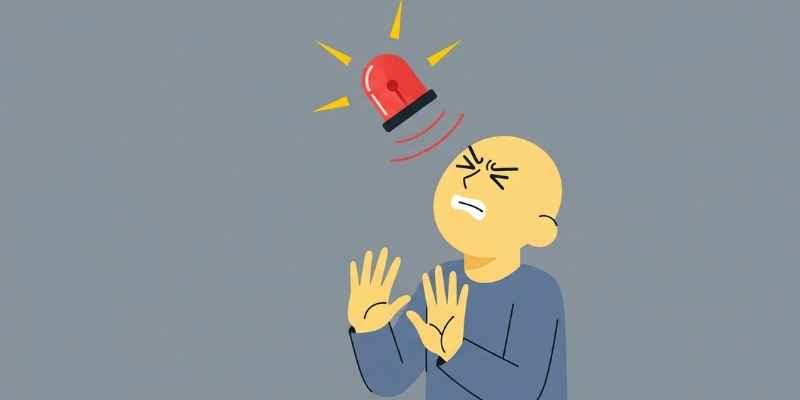
Anger is a primary, universal human emotion. Think of it as an alarm system. Its core function is to signal that something is wrong, a boundary has been crossed, or a need is not being met. In relationships, anger might arise when you feel unheard, disrespected, or unfairly treated.
Anger itself is not inherently bad. It can be healthy or unhealthy depending on how it is expressed.
- Healthy anger is communicated directly and respectfully. It focuses on the specific behavior and your feelings about it (e.g., “I felt upset when you didn’t call to say you’d be late”). It seeks resolution and change.
- Unhealthy anger is explosive, aggressive, or controlling. It involves attacks on the other person’s character (e.g., “You’re so selfish for not calling!”). This is often called chronic anger.
It is also helpful to distinguish between short term, reactive anger that fades and long term, simmering anger that can turn into resentment.
The key is that anger, at its core, is often about a desire for something to change within the relationship. It can even be a sign that you care enough to fight for something better.
What Is Contempt?
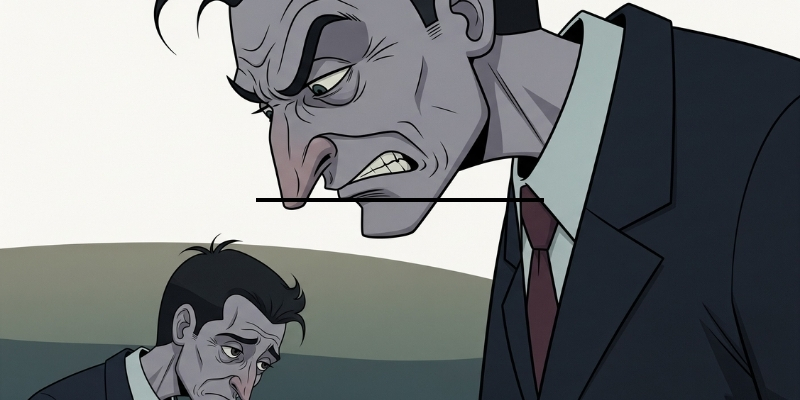
If anger says, “You hurt me,” contempt says, “You are beneath me.” Contempt is not a simple, primary emotion like anger or sadness. It is a complex mix of anger and disgust, laced with a deep sense of superiority.
It is the feeling of looking down on someone, of seeing them as worthless or deserving of mockery.
In relationships, contempt is the ultimate form of disrespect. It communicates not just that you are upset with your partner’s actions, but that you dismiss their entire being.
It creates emotional distance and erodes the fundamental friendship and admiration that holds a partnership together. While an angry argument might leave you both bruised, contempt strikes at the core of a person’s self worth and the relationship’s trust.
You often see contempt in subtle, non verbal cues and toxic communication patterns:
- Eye rolling or a sneering lip curl.
- Sarcasm and mockery disguised as humor (e.g., “Oh, great job cleaning the kitchen. I can still see the counters.”).
- A mocking, disdainful tone of voice.
- Dismissive humor that belittles your partner in front of others.
- Hostile body language like turning away, crossing arms, and sighing heavily.
Contempt vs Anger: Core Psychological Differences
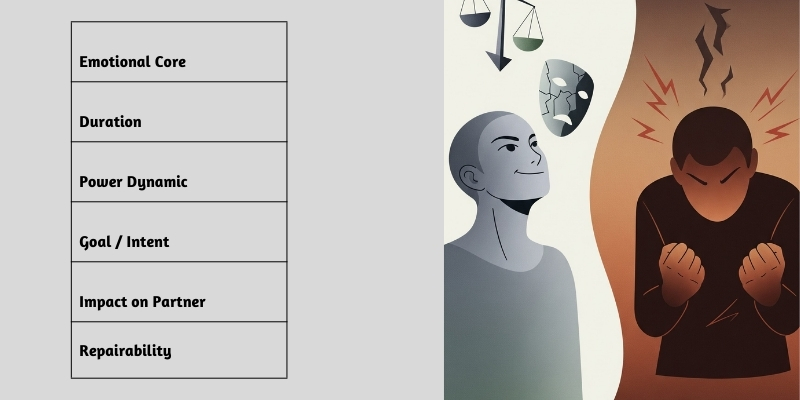
Understanding the distinction between these two states is crucial. The table below breaks down their core differences, a format that helps clarify these complex emotional concepts.
| Feature | Anger | Contempt |
| Emotional Core | Frustration, hurt, a sense of injustice. A “hot” emotion. | Disgust, superiority, disdain. A “cold,” dismissive emotion. |
| Duration | Can be short lived and situational. | Is often chronic, reflecting a stored, global negative view of the partner. |
| Power Dynamic | Can exist between equals in conflict. | Establishes a one up, one down dynamic. The contemptuous partner positions themselves as superior. |
| Goal / Intent | Often seeks change, to be heard, or to set a boundary. | Seeks to dismiss, demean, or psychologically distance oneself from the partner. |
| Impact on Partner | Makes a partner feel attacked, defensive, or upset. | Makes a partner feel worthless, despised, and small. It attacks their sense of self. |
| Repairability | Arguments stemming from anger can often be repaired with an apology or changed behavior. | Damage from contempt is much harder to repair because it erodes the foundation of respect and safety. |
In short, anger is often about “we have a problem,” while contempt communicates “you are a problem.”
Why Contempt Is More Dangerous Than Anger in Relationships
John Gottman’s legendary research on thousands of couples provides undeniable evidence of contempt’s destructive power.
He identified four toxic communication patterns he called the “Four Horsemen of the Apocalypse”: Criticism, Defensiveness, Stonewalling, and Contempt. Of these, contempt is the most severe.
The statistics from Gottman’s work are stark:
- Couples who display contempt have a 93% divorce rate within 14 years.
- The presence of contempt predicts relational “disaster” in over 91% of cases, far exceeding the predictive power of anger alone.
So the question is, why is contempt so corrosive? Anger, even when loud, often still operates within the framework of the relationship. Two people are engaging, however poorly.
Contempt, however, signals emotional withdrawal. It is a way of leaving the relationship while still physically being there. It actively blocks repair attempts because you cannot fix a problem with someone you fundamentally disrespect.
The long term psychological impact on the receiving partner includes chronic stress, anxiety, depression, and a profound loss of self esteem.
How Anger Escalates Into Contempt Over Time
Contempt rarely appears on a first date. It typically grows slowly from unresolved, festering wounds. The progression often looks like this:
- Unresolved Anger: A partner’s behavior causes anger, but the issue is not addressed effectively.
- Building Resentment: The anger, never resolved, hardens into resentment. You start keeping a mental list of your partner’s wrongs.
- Emotional Distancing: To protect yourself from the hurt of ongoing unresolved issues, you begin to pull away emotionally. You stop feeling vulnerable and start feeling cold.
- Emergence of Contempt: From this place of distance and stored resentment, you begin to see your partner not as a loved one who is failing, but as a failing person. Their flaws become evidence of their inferiority, not just their mistakes. This is the birth of contempt, fueled by repeated unmet needs and unresolved power struggles.
Signs of Contempt in a Relationship
It is vital to recognize contempt in its early stages. Here are the key signs of contempt in a marriage or long term relationship:
- Sarcasm as a Primary Language: Using biting, hurtful sarcasm instead of direct communication.
- Mockery and Name Calling: Making fun of your partner’s interests, feelings, or character. Using belittling labels.
- Non Verbal Disrespect: The classic eye roll, sneering, or a contemptuous smirk during a serious conversation.
- Speaking from Superiority: Using phrases that frame you as the smart, long suffering parent and your partner as the foolish, irresponsible child (e.g., “I would have thought someone with your education could figure this out.”).
- Invalidating Feelings: Dismissing your partner’s emotions as stupid, crazy, or an overreaction.
For contrast, anger only behaviors might include raising your voice, stating strong complaints, or needing to take a walk to cool down. These can be damaging, but they lack the core ingredient of disgust and superiority that defines contempt.
Can Anger Exist Without Contempt?
Absolutely! This is a critical point for couples to understand. Healthy anger can and does exist without contempt.
It is possible to be fiercely angry with someone you still deeply love, respect, and see as an equal. You can argue passionately about a behavior while still valuing the person.
The defining line is respect. Anger can coexist with respect. Contempt, by its very definition, always implies disrespect and a loss of admiration.
Recognizing that not all conflict is contemptuous can reduce fear and help partners address angry feelings sooner, before they have a chance to curdle into something worse.
The Impact of Contempt on Long Term Relationship Health
The toll of living with contempt is severe for both partners and the relationship itself.
- Breakdown of Emotional Safety: The relationship ceases to be a safe haven. The attacked partner feels they must constantly guard themselves.
- Increased Defensiveness and Stonewalling: In response to contempt, partners often become hyper defensive or completely shut down (stonewall), creating a toxic cycle.
- Loss of Intimacy: Emotional and physical intimacy withers. It is very difficult to be vulnerable with someone who scorns you.
- Higher Stress and Mental Health Strain: Living in a state of chronic psychological attack creates sustained stress, leading to anxiety, depression, and even weakened physical health.
How to Replace Contempt With Healthier Conflict
If you recognize contempt in your relationship, there is hope, but it requires conscious, consistent effort.
- Build Awareness: Both partners must commit to noticing contemptuous thoughts, tones, and gestures. Call a gentle “time out” if you feel contempt rising.
- Shift from Criticism to Needs: Instead of criticizing your partner’s character (“You’re so lazy”), express a specific need and a feeling (“I feel overwhelmed when the trash is full. I need help remembering to take it out.”).
- Practice a Culture of Respect: Make a conscious choice to speak to each other with basic politeness and respect, even during disagreements. Ban sarcasm, mockery, and name calling.
- Rebuild Emotional Safety: This takes time. Share appreciations daily. Work on rebuilding friendship by spending positive, non conflict oriented time together.
- Learn to Repair: After a conflict, practice repair attempts. This can be a simple apology, a hug, or saying, “I didn’t mean to sound so harsh.”
When to Seek Professional Help
You should strongly consider seeking help from a qualified couples therapist if:
- Contempt has become a habitual, automatic response in your conflicts.
- Conversations quickly become emotionally unsafe, leaving one or both partners feeling devastated.
- Your own repair attempts consistently fail, and you feel stuck in a negative cycle.
- You feel hopeless about the relationship’s future.
A good therapist can provide a safe space to interrupt these patterns, teach concrete communication skills, and help you heal from the accumulated resentment. It is important to seek help early, as the longer contempt is entrenched, the harder it is to root out.
Anger management courses offered by Mastering Anger can help you identify your emotion so you can improve your relationship.
Frequently Asked Questions
Is contempt worse than anger in relationships?
Yes, overwhelmingly. Decades of research show contempt is the single most destructive emotional pattern in a relationship and the strongest predictor of divorce, far surpassing anger alone.
Can a relationship recover from contempt?
It is difficult but possible. Recovery requires both partners to acknowledge the problem, completely stop contemptuous behaviors, rebuild a foundation of respect and friendship, and often requires the guidance of a skilled couples therapist.
What does contempt look like emotionally?
For the person feeling it, contempt feels like disgust and a sense of superiority toward their partner. For the person receiving it, it feels like being despised, worthless, and emotionally alone.
Is sarcasm always a sign of contempt?
Not all sarcasm is contemptuous, but in the context of an ongoing relationship conflict, it is very often a delivery method for contempt. Sarcasm that aims to belittle or mock a partner’s feelings or perspective is a clear warning sign.
How is contempt different from resentment?
Resentment is a lingering anger over past wrongs. It is a feeling of unfairness. Contempt is a present attitude of disdain and superiority. Resentment can fuel contempt, but contempt adds the element of disgust and looking down on the other person.
Conclusion
When it comes to relationship emotions, anger is a signal light, while contempt is a check engine light for the entire system. Anger tells you something needs attention. Contempt warns that the foundation of respect is crumbling.
Understanding the critical difference between contempt vs anger provides you with a powerful tool. It allows you to identify the most toxic pattern before it causes irreversible damage.
Early awareness creates the opportunity for repair, for a return to basic respect, and for rebuilding a partnership where both people feel safe, valued, and heard.
The journey from contempt back to connection is challenging, but with commitment and often professional help, it is a path toward saving and profoundly deepening your relationship.
Dr. Carlos Todd PhD LCMHC specializes in anger management, family conflict resolution, marital and premarital conflict resolution. His extensive knowledge in the field of anger management may enable you to use his tested methods to deal with your anger issues.



Responses